CPM vs RPM: What's the Difference and Why It Matters

If you've ever looked at your YouTube analytics and felt confused by all the numbers, you're not alone. Two of the most misunderstood metrics are CPM and RPM. Creators see both of them sitting right next to each other in their dashboard and assume they mean the same thing. They don't, and mixing them up can lead to some pretty bad decisions about your channel.
A lot of you have asked about this in the comments and via email, so I figured it was time to break it down clearly. Understanding the difference between CPM and RPM isn't just a nerdy numbers exercise. It actually changes how you think about your content, your audience, and how much money you're leaving on the table. Once it clicks, you'll never look at your analytics the same way again.
Think of it this way. CPM is what advertisers pay. RPM is what you actually earn. Those two things sound similar but they work very differently, and knowing the gap between them tells you a lot about the health of your monetization strategy. Let's get into it.
What CPM actually means
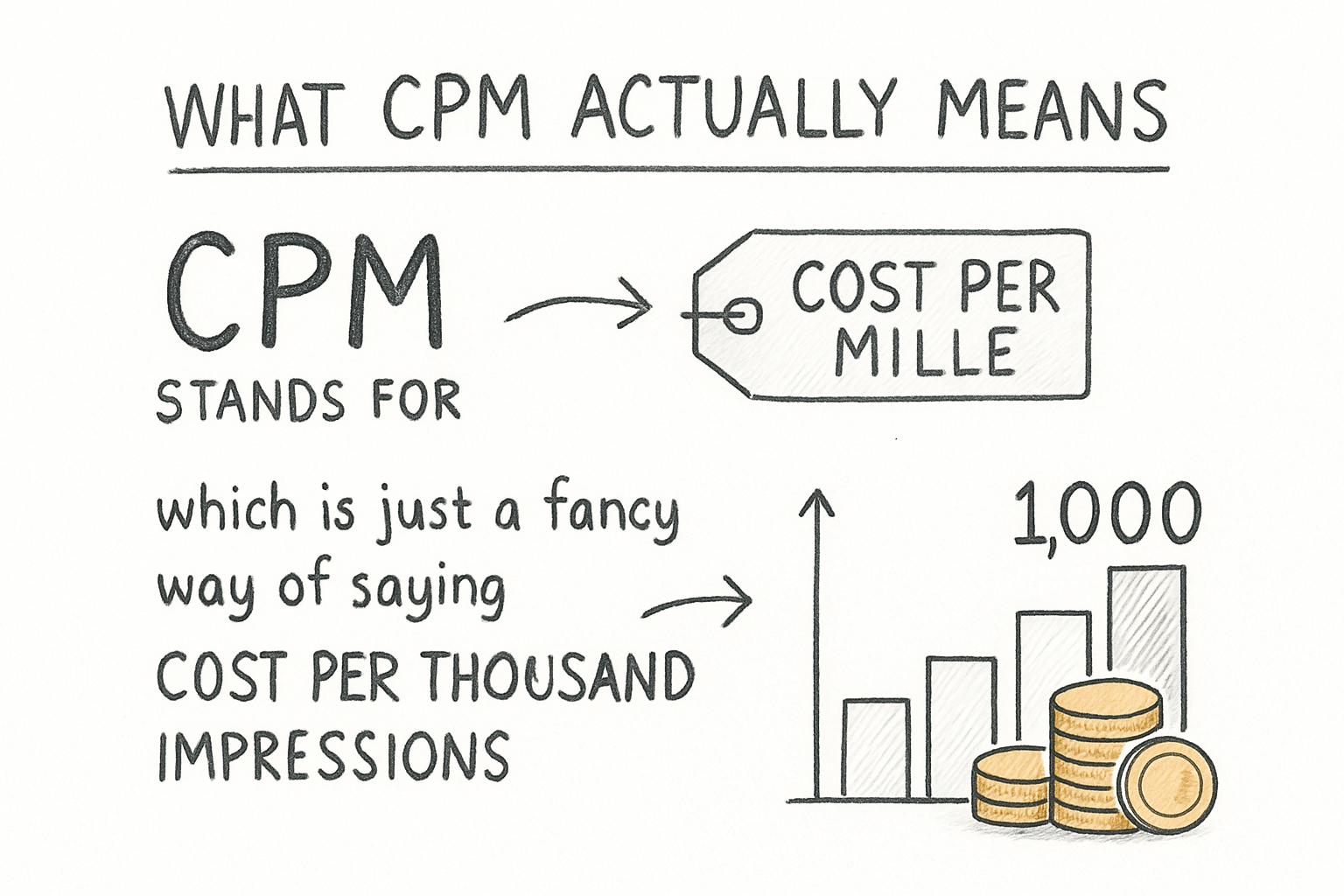
CPM stands for cost per mille, which is just a fancy way of saying cost per thousand impressions. This is the number advertisers pay YouTube to show their ads one thousand times. So if an advertiser has a CPM of $5, they're paying $5 every time their ad gets shown to a thousand viewers. It's entirely about what the advertiser spends, not what ends up in your pocket.
YouTube sets CPM rates based on things like the time of year, the content category, and the audience being targeted. Finance, business, and legal content tend to pull higher CPMs because advertisers in those spaces will pay more to reach people who are already thinking about money. Gaming or entertainment content usually has lower CPMs because ad budgets in those categories are more competitive and stretched thinner.
Here's the thing a lot of creators get tripped up on. They see a high CPM and think they're raking in cash. But CPM doesn't account for YouTube's cut, which is 45 percent of ad revenue. It also doesn't factor in the fact that not every single view on your video will even have an ad attached to it. CPM is a useful benchmark, but it's not your earnings report.
I personally think CPM gets way too much attention in creator circles. People brag about high CPMs like it's the whole story, when really it's just one piece of the puzzle. If you want to understand what your channel is actually earning, you have to look at RPM instead.
What RPM actually means
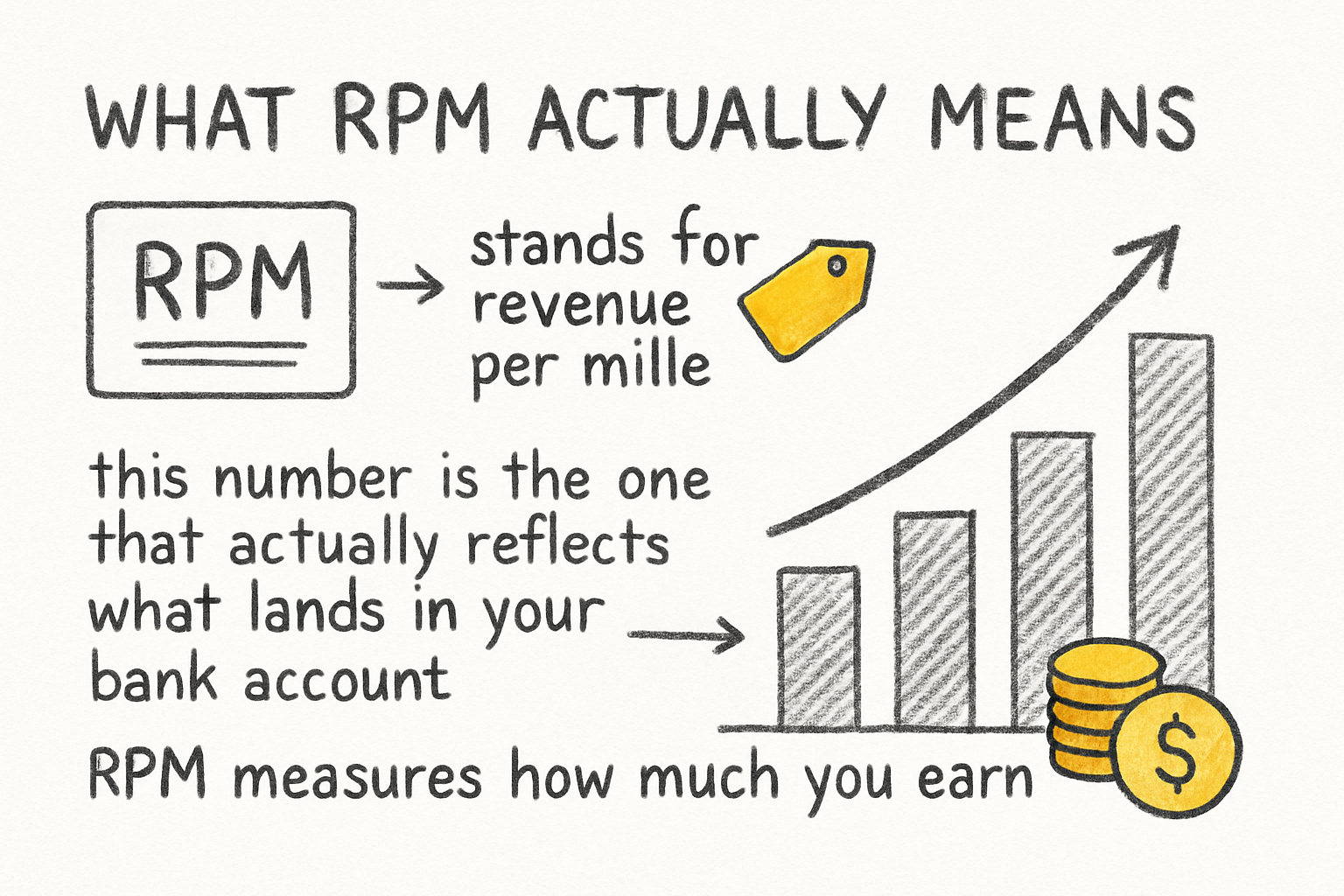
RPM stands for revenue per mille, and this number is the one that actually reflects what lands in your bank account. RPM measures how much you earn per thousand video views, after YouTube takes its cut and after all revenue sources are included. That means it pulls in money from ads, channel memberships, Super Chats, and YouTube Premium revenue all at once.
I remember when I first started paying close attention to analytics, I kept focusing on CPM because it was the bigger number and felt more impressive. Then someone pointed out that RPM was the real measure of how well my content was monetizing. Once I shifted my focus there, I started making better decisions about what topics to cover and how long to make my videos.
Because RPM is calculated across all your views, not just the ones that got an ad, it tends to be lower than your CPM. That's completely normal. A channel might have a $10 CPM but only a $3 RPM, and that gap makes total sense once you understand how the math works. Shorter videos, skipped ads, and viewers using ad blockers all pull RPM down without touching CPM at all.
If you're just getting started with monetization or want to understand the full picture of how YouTube pays creators, our guide on how to monetize your videos on YouTube walks through all the revenue streams that feed into your RPM. Knowing where the money comes from helps you make smarter choices about how you build your channel.
Why the difference matters for your growth strategy
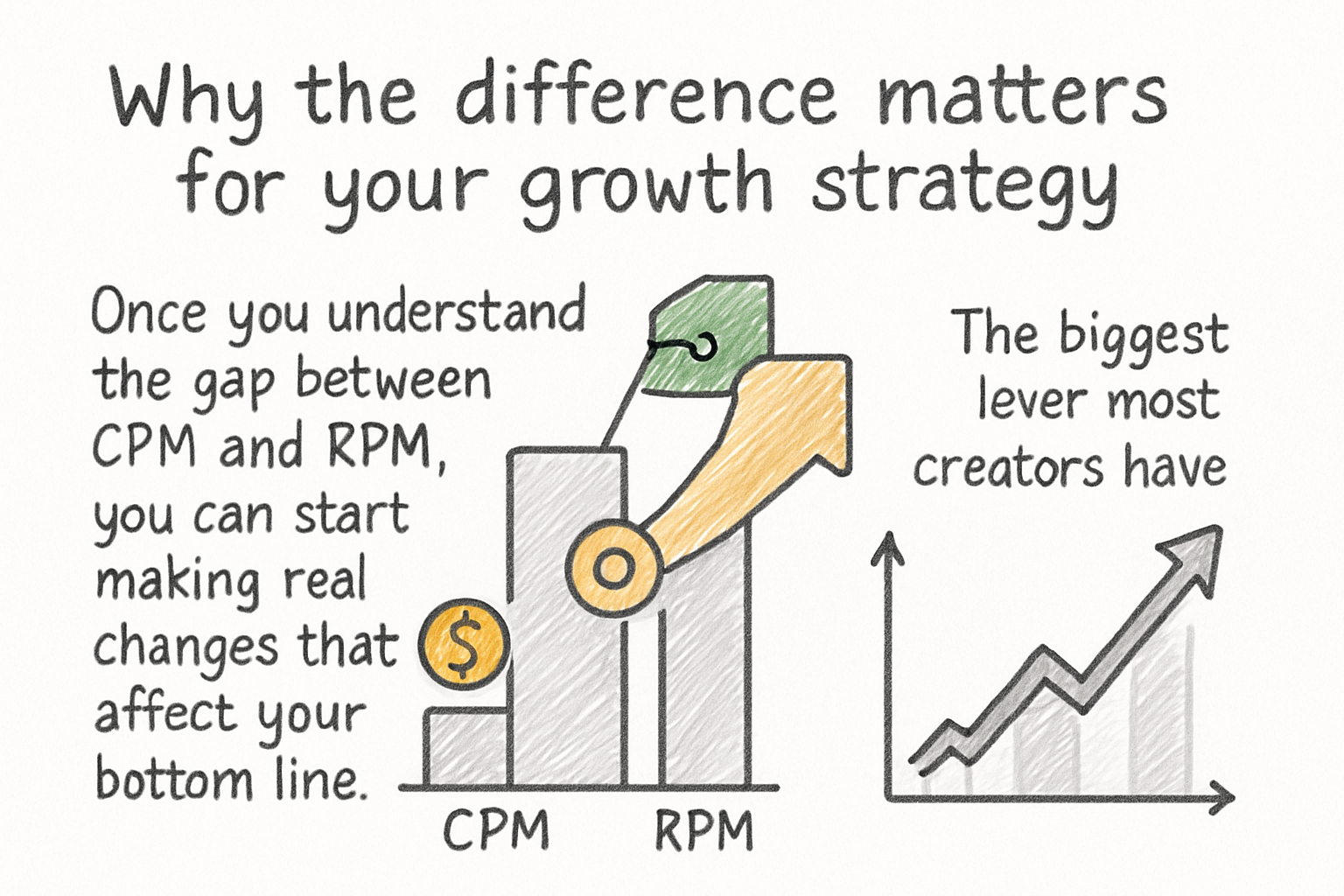
Once you understand the gap between CPM and RPM, you can start making real changes that affect your bottom line. The biggest lever most creators have is watch time. When viewers watch more of your video, they see more ad placements. YouTube can serve mid-roll ads in videos over eight minutes long, which means longer, well-paced videos give advertisers more chances to show their ads. More ad placements means more revenue per view, which pushes your RPM up even if your CPM stays the same.
Your content niche matters a lot here too. Some topics naturally attract higher-paying advertisers. If your channel covers personal finance, software tools, or career development, you're likely to see higher CPMs simply because the advertisers targeting those audiences have bigger budgets. That doesn't mean you should chase a niche just for money, but it's worth knowing how your topic area affects what you can earn. We actually covered a lot of this in our YouTube channel growth strategy post if you want to go deeper on how niche choice shapes your overall trajectory.
Audience location plays a huge role too. Viewers in the United States, United Kingdom, Canada, and Australia tend to generate much higher CPMs than viewers in other countries. This doesn't mean you should try to game your audience demographics, but it does explain why two creators with the same number of views can have very different earnings. A channel with a mostly US-based audience will almost always out-earn a channel with similar views spread across lower-CPM regions.
The smartest move is to focus on the things you can actually control: video length, watch time, niche alignment, and diversifying your revenue streams. Chasing CPM alone is like staring at one ingredient and ignoring the whole recipe. When your RPM climbs, that's how you know your monetization strategy is working. That's the number worth obsessing over.
Ready to take the next step?
Now that you know the difference between CPM and RPM, you're in a much better position to read your analytics and actually understand what they're telling you. If you want to keep building smarter habits around your YouTube channel, check out Kliptory for tools that help creators grow with less guesswork. And drop a comment below letting me know which metric you've been watching more closely, CPM or RPM. I'd love to hear how your monetization journey is going.